Documents telechargeables Cryptobenthiques golfe du Lion
Documents telechargeables EnQuete d'Hippocampes
Documents d'aide a l'observation des Syngnathides
Rapports et dossiers EnQuete d'Hippocampes
Historique des actualites
Historique des actualites 2012
Historique des actualites 2011
Documents telechargeables Voyages BSM
Documents telechargeables Fish Watch
ASSOCIATION Peau-Bleue : Connaître et faire connaître la vie aquatique
Créée en 1995, l'association scientifique et naturaliste Peau-Bleue réunit compétences, passions et énergies dans un objectif commun : mieux connaître - et faire connaître - l'extraordinaire diversité biologique et écologique des milieux aquatiques, marins ou d'eau douce. Peau-Bleue a développé plusieurs projets de science participative, ou citoyenne, et son expertise dans ce domaine est désormais reconnue.
Voyages Bio Sous-Marine - Depuis 2002, les voyages BSM offrent aux plongeurs amateurs la possibilité de participer à des études scientifiques en plongée. Ils ont aujourd'hui pris une nouvelle dimension, avec de véritables démarches de coopération et d'éco-volontariat scientifique. Parmi les programmes scientifiques lancés grâce aux voyages BSM, on peut en particulier citer le projet Fish Watch Mer Rouge, qui vise à décrire les peuplements de poissons littoraux, de la Mer Rouge au Golfe Arabo-Persique.
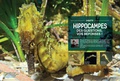
EnQuête d'Hippocampes - Initié en 2005, avec ses déclinaisons Hippo-ATLAS, Hippo-THAU et désormais Hippo-HABITAT, ce programme a pour objectif d'étudier ces étranges poissons que l'on sait menacés partout dans le monde, mais dont on connaît très mal l'écologie sur nos côtes. Ce programme s'étend aujourd'hui aux syngnathes (poissons-aiguilles) qui appartiennent à la même famille, les Syngnathidés, et dont certaines espèces présentent des enjeux de préservation tout aussi cruciaux.
Fish Watch Forum - Depuis 2015, cet Observatoire Participatif des Poissons Marins collecte vos observations de poissons des côtes d'Europe et de Méditerranée. Grâce à une formidable équipe de validation bénévole, grâce à un pool d'experts enthousiastes, grâce à tous ceux qui envoient leurs photos et signalisations, le Fish Watch Forum vous permet de découvrir des milliers de photos de poissons parfois rarissimes !
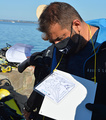
Un programme de recherche unique sur les poissons originaires de Mer Rouge en Méditerranée Orientale.
Réalisé du 26 septembre au 3 octobre 2010, ce voyage était la troisième mission Bio Sous-Marine...
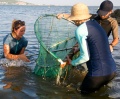
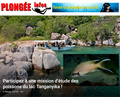
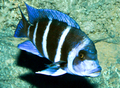
Une mission d'étude scientifique des poissons du lac Tanganyika, de leur écologie et de leur comportement (Tanzanie)
S'étendant sur 670 km au cœur du Rift est-africain, le lac Tanganyika est l’un des plus grands lacs du monde....
Les plus belles images de nos contributeurs.
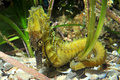
Une sélection faite parmi les photos d'hippocampes et syngnathes qui nous sont envoyées, selon l'humeur ou...
Actus Peau-Bleue
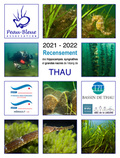
Recensement Thau 2022 : le bilan !
17/02/2023
Le bilan du recensement global des hippocampes, syngnathes, grandes nacres et habitats de la lagune de Thau est désormais accessible.
Vous pouvez le télécharger ici.
Soutenez-nous: participez !
25/06/2022
Nous avons besoin de plongeurs pour compléter les équipes de nos prochaines missions sous-marines : voir ici. Vous pouvez aussi nous soutenir par un don ou en adhérant à l'association Peau-Bleue : voir là.
Les voyages Bio Sous-Marine 2022 !
01/03/2022
Les programmes des voyages BSM 2022 sont en ligne. Découvrez-les dans le menu de gauche (Voyages Bio Sous-Marine / Les prochains voyages BSM).
Hippocampes de Thau : les plongeurs se mobilisent
17/08/2021
Les 13 et 27 juin 2021, plusieurs dizaines de plongeurs se sont rassemblés pour participer à une formation au recensement participatif des hippocampes de la lagune de Thau, lors d'opérations coorganisées avec les comitésOccitanie et Hérault de la FFESSM (Fédération de plongée) et les Sentinelles de la mer Occitanie. Pour découvrir les résultats de cette mobilisation, cliquez ici (PDF 5,8 Mo).
"Des aiguilles dans une botte d'herbe"
21/07/2020
Du 4 au 7 septembre 2020, cherchez avec nous « Des aiguilles dans une botte d’herbe » ! Une étude en bord de lagune, à laquelle VOUS pouvez participer. Inscrivez-vous !
Pour obtenir les infos, cliquez ici.
Scuba People soutient notre mission Tanganyika
07/06/2019
Merci à Scuba People de relayer les informations sur notre mission d'étude des poissons du lac Tanganyika, et notre appel à participation. Pour les détails d'organisation de la mission, cliquez ici.
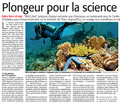
Plongee-Infos soutient notre mission Tanganyika
03/06/2019
Lisez cet article, et soutenez-nous en faisant connaître cette mission à des plongeurs qui pourraient être intéressés ! Les détails sur la mission sont ici.
Un livre Hippocampes !
11/01/2019
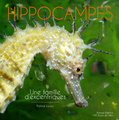
Le livre "Hippocampes, une famille d'excentriques" vient de paraître ! Cet ouvrage de Patrick Louisy fait le point sur ce qu'on sait aujourd'hui sur ces animaux, notamment grâce aux programmes de science participative de Peau-Bleue (et à tous les contributeurs bénévoles). Il est publié en co-édition par Biotope-Editions et le CPIE Bassin de Thau.
Rencontrer Patrick Louisy au Salon de la plongée ?
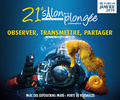
Du 11 au 14 janvier 2019, Peau-Bleue, le Fish Watch Forum et notre implication dans l'étude des hippocampes seront à l'honneur au Salon International de la Plongée Sous-Marine à Paris. Venez nous retrouver sur le stand des Sentinelles de la mer Occitanie (M 02 - N 01) ainsi que lors des conférences de Patrick Louisy. Apportez aussi vos photos de poissons inhabituels de nos côtes sur clé USB : vous pourrez les intégrer au Fish Watch Forum "en direct", avec l’aide de nos bénévoles. Voir ici.
Tout sur les hippocampes !
01/03/2018
Le magazine SUBAQUA de janvier 2018 a publié un article signé de Patrick Louisy, notre Directeur scientifique, qui fait le point des connaissances sur ces animaux mythiques, notamment grâce aux observations et à la mobilisation de centaines d’amateurs, plongeurs, pêcheurs ou autres naturalistes dans l’âme... Peut-être bientôt vous aussi ? Le magazine n'étant plus en kiosque, vous pouvez le télécharger ici (PDF, 2,3 Mo).
EnQuête d'Hippocampes, demandez le bilan !
06/12/2017
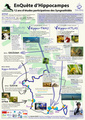
Déjà 12 ans de programme participatif EnQuête d'Hippocampes !
Nous avons synthétisé le bilan de cette fantastique aventure scientifique et humaine sous forme d'un poster que vous pouvez télécharger ici (2,8 Mo).
400 espèces pour le Fish Watch Forum !
12/04/2017
Millerigobius macrocephalus est un minuscule gobie de Méditerranée, qui reste méconnu car il est difficile à identifier in situ. Cette signalisation a été envoyée par Marcelo Kovacic, curateur du Muséum d'Histoire Naturelle de Rijeka (Croatie) et grand spécialiste des gobies de Méditerranée. La contribution et le soutien de ce scientifique reconnu démontrent l'intérêt que peut présenter le Fish Watch Forum pour la recherche ! Vous souhaitez découvrir toutes les espèces de gobies incluses à ce jour dans le FWF ? Cliquez ici.
Le Fish Watch Forum entame sa 3ème année calendaire... La dernière signalisation de l’année passée représente une espèce nouvellement décrite en 2016, dont on ne connaissait pas de photos sous-marines, le sar levantin. Et la première de 2017 est un lançon à point noir, espèce rarement photographiée et identifiée in situ. Le FWF vous offre plus de 2700 photos de 378 espèces d'Europe et Méditerranée fournies par 96 photographes, et bientôt plus encore... Grâce à vous ?
2000 photos sur le Fish Watch Forum !
15/07/2016
La 2000ème photo du Fish Watch Forum est désormais en ligne ! Il s’agit d'une signalisation de Buenia affinis, un petit gobie méconnu dont il n’existe que de très rares photos. Bravo à Roberto Pillon pour cette signalisation, et merci à tous les contributeurs comme à l’équipe de validation du FWF : ce sont eux qui font vivre ce projet participatif ! A découvrir sur www.fish-watch.org
Expo Hippocampe !
08/07/2016
Vous avez toujours tout voulu savoir sur les hippocampes ? De la lagune de Thau jusqu'aux eaux tropicales découvrez ces animaux fascinants, leurs particularités, leur mode de vie, leurs cousins, mais aussi comment des gens se sont mobilisés pour les observer, les étudier, les faire connaître.
Cette exposition saluée par tous est visible sur l'île des Embiez (à Six-Fours Les Plages, dans le Var) jusqu'au 20 août 2016, puis elle continuera à voyager partout en France.
Conçu et porté par l'association Peau-Bleue et le laboratoire ECOMERS, le Fish Watch Forum a pour but de collecter et de rassembler VOS OBSERVATIONS sur les poissons marins d'Europe de l'Ouest et de Méditerranée. Envoyez vos photos et observations : c'est grâce aux contributions de tous que ce site pourra s'enrichir jour après jour ! Allez le visiter: http://www.fish-watch.org
Nouvelle édition du "Louisy"
24/04/2015
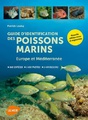
Voilà enfin sortie en librairie la nouvelle édition, revue et augmentée, du Guide d'Identification des Poissons Marins d'Europe et de Méditerranée. La toute première édition de ce guide devenu une référence avait reçu le prix du meilleur guide du monde sous-marin au festival Mondial de l'Image Sous-Marine d'Antibe en 2002. Disponible dans les meilleures librairies et sur le site des éditions Ulmer.
Inscriptions voyage BSM Cap-Vert
23/04/2015
Un nouveau voyage BSM est programmé pour le début du mois de novembre à Tarrafal sur l'ïle capverdienne de Santiago. Pour plus d'information, téléchargez le document descriptif en pdf.
La Science du grillage à l'honneur !
25/02/2014
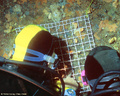
Notre projet de voyage d'étude de la vie marine dans une grotte de Croatie (voir ici) a les honneurs de la presse sur le site de la revue Plongée Magazine !
Mission Fish Watch à Oman
03/02/2014
Un nouveau voyage Bio Sous-Marine est programmé pour l'automne 2014 : cette mission de recensement des poissons se déroulera du 8 au 22 novembre 2014, en deux localités de la Mer d'Oman. Tout plongeur autonome peut y participer. Plus d'information ici. Ce voyage BSM est organisé en partenariat avec l'agence de voyages plongée Blue Lagoon / Blue World.
Thau, royaume de l'hippocampe
27/01/2014
Samedi 1er février 2014, à l'occasion de la Journée Mondiale des Zones Humides, Patrick Louisy donnera une conférence sur la lagune de Thau et ses hippocampes, à la lumière des études réalisées dans le cadre du projet Hippo-THAU. Lieu : Marseillan (34), théâtre municipal Henri Maurin à 18 h. Vous pouvez télécharger le communiqué de presse.
Hippo-THAU est un projet initié par Peau-Bleue en 2005, géré par le CPIE Bassin de Thau depuis 2008.
Peau-Bleue au Salon de la Plongée
01/01/2014
L'association Peau-Bleue sera présente au Salon International de la Plongée Sous-Marine à Paris du 10 au 12 janvier 2014 (stand C21). Venez nous rendre visite et rencontrer les membres de l'association ! Le nouveau poster "ALIENS", co-produit par Peau-Bleue et Blue Lagoon sera également disponible sur le stand. C'est grâce à notre partenaire Blue Lagoon / Blue World que nous pourrons être présents sur le salon.
Philippines 2013 : le rapport
22/12/2013
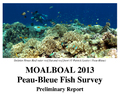
Le rapport scientifique de la mission d'étude Fish Watch de juillet 2013 à Moalboal est désormais disponible (téléchargeable ici, en anglais). Vous pouvez aussi découvrir le dossier photo de cette mission.
Destination TANGANYIKA !
11/11/2013
La première mission scientifique de 2014 se déroulera dans les eaux du lac Tanganyika, en Afrique de l'Est. Ce lac immense est un des hauts-lieux de l'évolution, où l'on trouve des centaines d'espèces de poissons endémiques. Pour en savoir plus, consultez la rubrique Prochains voyages BSM. Attention, les conditions logistiques n'étant pas simples, le nombre de places est limité.
Hippocampes et extraction de sable
15/10/2013
Depuis 2012, l'association Peau-Bleue s'est associée au Seaquarium du Grau du Roi et à l'association Stellaris pour étudier une population d'hippocampes à museau court près du banc de sable de l'Espiguette, à proximité de Port-Camargue. Or, un projet d'extraction de sable risque d'affecter le secteur où ces hippocampes ont été repérés. Le Seaquarium a produit un film qui analyse la situation et explicite les enjeux. Ce film est visible ici.
Hippo-THAU à THALASSA !
24/05/2013
Le 31 mai prochain, Hippo-THAU sera à l'honneur dans l'émission Thalassa, dans un reportage sur les étangs littoraux du Languedoc-Roussillon intitulé "Au Pays des Lagunes". Hippo-THAU a été choisi comme le projet à mettre en lumière sur la lagune de Thau. Le tournage a eu lieu le 7 avril dernier, à l'occasion d'une des premières plongées de suivi Hippo-THAU de la saison de printemps 2013, avec la participation de Plongée Passion.
Un syngnathe à l'honneur sur Photo Bio Sous-Marine
14/02/2013
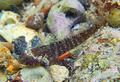
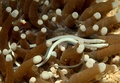
C'est un bien étrange syngnathe qui est actuellement mis à l'honneur sur le site Photo Bio Sous-Marine (dont Peau-Bleue est partenaire). Petit poisson aux allures de spaghetti, Siokunichthys nigrolineatus est un commensal du corail-champignon Heliofungia actiniformis.
Cerbère-Banyuls : nos recherches à l'honneur
27/01/2013
Notre étude de "l'effet réserve" sur les poissons dans la réserve naturelle marine de Cerbère-Banyuls fait l'objet d'un article dans l'Ecrin Bleu n° 9 (bulletin d'information de la réserve), ainsi que que dans Marginatus, bulletin d'information du Groupe d'Etude du Mérou (GEM). Ce travail a été réalisé en partenariat avec la réserve marine de Cerbère-Banyuls et plusieurs laboratoires scientifiques. Pour plus d'information sur cette mission, consultez notre compte-rendu en ligne.
Peau-Bleue au Salon International de la Plongée
01/01/2013
Peau-Bleue sera présente au Salon Intenational de la Plongée Sous-Marine à Paris, du 11 au 13 janvier 2013 (Porte de Versaille, Hall 6). Venez sur notre stand C01-A02 (près de l'entrée). Vous y rencontrerez une partie de l'équipe et des membres actifs de l'association, qui pourront vous parler de nos programmes, mais aussi de leur expérience, leur vécu, leurs passions... Cette année, nous partageons notre stand avec l'Agence des aires marines protégées...
, dont nous sommes partenaires pour développer les sciences participatives dans le monde de la plongée. Merci à Blue Lagoon, notre partenaire pour les voyages plongée, et à la direction du Salon pour avoir facilité notre participation à cet événement.
Lire la suite
Fermer le texte
Film : étude des hippocampes au Grau du Roi
05/12/2012
En partenariat avec le Seaquarium du Grau du Roi, l'association Peau-Bleue a engagé l'étude d'une population d'hippocampes à museau court en baie d'Aigues Mortes. Ce projet a fait l'objet d'un reportage filmé que vous pouvez consulter ici. Ce partenariat scientifique avec le Seaquarium se poursuivra en 2013, afin de mieux cerner l'écologie d'Hippocampus hippocampus sur les côtes méditerranéennes, et d'estimer si des risques pèsent sur cette population.
Pour en découvrir plus, jetez un œil à notre rubrique Hippo-POTINS, et consultez aussi les signalisations Hippo-ATLAS et Hippo-HABITAT en indiquant Grau du Roi dans la recherche par mots clés.
Les données Hippo-ATLAS dans l'INPN
03/12/2012
Les données de l'Hippo-ATLAS sur les espèces d'hippocampes et syngnathes de nos côtes ont été incluses dans la base de données de l'Inventaire National du Patrimoine Naturel (INPN) géré par le Muséum National d'Histoire Naturelle. Elles sont donc désormais intégrées aux informations de l'INPN consultables en ligne (voir par exemple ici, là ou là). Cette coopération avec l'INPN a été engagée dans le cadre du partenariat entre Peau-Bleue et l'Agence des aires marines protégées pour le développement d'un réseau d'observateurs en plongée. Sont intégrées à ce jour les données Hippo-ATLAS enregistrées jusqu'en janvier 2012. D'autres suivront, sur une base annuelle.
Des Racines et des Ailes à Thau
12/11/2012
Le magazine télévisé "Des Racines et des Ailes" du mercredi 14 novembre s'intéressera aux lagunes du Languedoc-Roussillon, et en particulier aux hippocampes de l'étang de Thau. Il y sera question du projet Hippo-THAU mené par le CPIE Bassin de Thau et l'association Peau-Bleue depuis 2005, et des relations qu'il a permis de tisser entre les scientifiques, les plongeurs et les professionnels de la lagune. Diffusion : France 3, mercredi 14 novembre 2012 à 20h45. Rediffusion le samedi 17 novembre à 22h40.
Un voyage BSM sur Plongée Magazine
29/10/2012
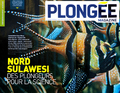
Notre voyage Bio Sous-Marine en Indonésie (Mission Fish Watch en Nord Sulawesi) fait l'objet d'un article dans le numéro 49 de la revue Plongée Magazine, actuellement en kiosque. Pour comprendre les enjeux de cette mission et l'implication de plongeurs bénévoles dans des projets de coopération scientifique, pour découvrir quelques résultats et photographies... Vous pouvez également en avoir un aperçu sur le site de la revue. La page de compte-rendu photo de la mission est en ligne ici.
Vos photos au Festival de l'Image Sous-Marine ?
20/10/2012
L'association Peau-Bleue sera présente au Festival Mondial de l'image Sous-Marine à Marseille, du 1er au 4 novembre 2012. A cette occasion, venez sur notre stand avec vos photos d'hippocampes et syngnathes de nos côtes : vous pourrez les intégrer en direct à l'Hippo-ATLAS avec l'aide de spécialistes de l'association. Ne manquez pas d'assister également à nos animations enfants "Dessine-moi un hippocampe". Vous pourrez enfin vous informer sur nos prochains Voyages Bio Sous-Marine organisés en partenariat avec Blue Lagoon, qui sera également présent.
Opération Hippo-THAU sur France 3
01/10/2012
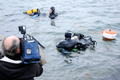
L'opération Hippo-THAU du week-end dernier a fait l'objet d'un reportage télévisé dans le journal de France 3 Languedoc Roussillon (*). Organisée par la ComBio 34 de la FFESSM (un grand merci à Annie Lafourcade), le CPIE Bassin de Thau et Peau-Bleue, cette opération a permis de former douze plongeurs amateurs passionnés, qui ont réalisé 58 transects de recensement des hippocampes et syngnathes sur trois sites. Lors de ces plongées, ils ont répertorié un total de 14 syngnathes et 4 hippocampes. (*) Vous pouvez voir le reportage sur ce site (choisir Journaux > Editions régionales > Languedoc Roussillon > 1920 Languedoc Roussillon 30/09/2012 [de 16'16" à 18'20"]).
RHIZOMA : le rapport
31/08/2012
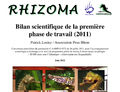
Depuis le lancement en 2011 du réseau RHIZOMA (observateurs sous-marins en Bretagne et Pays de la Loire), Peau-Bleue est partenaire du projet dans sa dimension d'étude des hippocampes et syngnathes. Le rapport scientifique de cette première année de coopération a été publié cet été. Vous pouvez le télécharger ici (PDF, 3,1 Mo).
Opération Hippocampes au Grau du Roi
27/07/2012
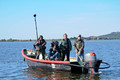
Le Seaquarium du Grau du Roi (*) et l'association Peau-Bleue ont organisé hier une plongée conjointe pour étudier les hippocampes à museau court dans la baie du Grau du Roi (Languedoc). Les quatre plongeurs présents ont observé 10 hippocampes à museau court, un hippocampe moucheté et un syngnathe aiguille. Ils ont surtout collecté des informations sur la morphologie et l'écologie de ces espèces, qui restent mal connues dans la région. Plus de détails dans notre rubrique Hippo-POTINS. (*) Le Seaquarium développe actuellement son implication dans la connaissance des hippocampes, avec en particulier un nouvel espace d'exposition qui leur est dédié (voir ici).